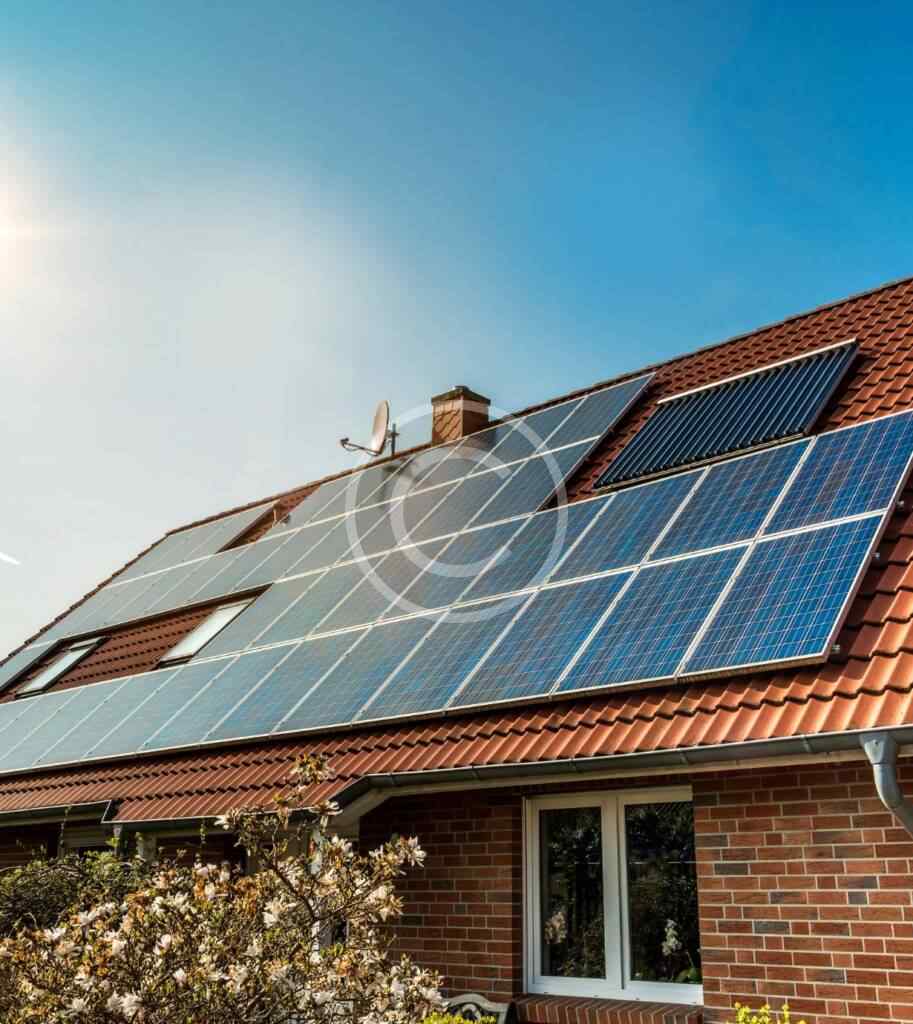
In recent years, solar energy has gained significant popularity as a renewable and sustainable source of power. With the decreasing costs of solar panels and the increasing concerns about climate change, many homeowners and businesses are considering installing solar systems to meet their energy needs to minimize their environmental impact and decrease energy expenses.
When it comes to solar systems, there are two main types: on-grid and off-grid systems. let’s explore the difference between these two systems and discuss which one might be better suited for your specific needs.
What is an On-Grid Solar System?
An on-grid solar system, also known as a grid-tied or grid-connected system, is a solar power system that is connected to the local utility grid. It consists of solar panels that convert sunlight into electricity, an inverter that converts the direct current (DC) generated by the panels into alternating current (AC) used by household appliances, and a meter that measures the electricity generated and consumed.
In an on-grid solar system, the electricity generated by the solar panel installers is used to power the electrical appliances and devices in your home or business.
When energy consumption exceeds the amount generated by solar panels, on cloudy days or at night, electricity can be drawn from the grid. This ensures a consistent power supply without interruptions. Conversely, when the solar system generates more electricity than the current usage, the excess energy is sent back to the grid, and you receive credits or compensation for the surplus electricity through a mechanism called net metering.
Net metering can be significantly reduced the electricity bill. It effectively allows utilizing the grid as a virtual storage system, providing flexibility and financial benefits.
On-grid solar systems are popular in areas where the utility grid is readily available and reliable. They offer the advantage of reducing reliance on fossil fuels by providing cost-effectiveness through net metering benefits.
What is an Off-Grid Solar System?
Off-grid solar systems operate independently without any connection to the utility grid. It functions independently. These systems generate electricity using solar panels. But it requires a battery backup and stores the solar power generated during the day.
In an off-grid residential solar system, solar panels are installed on the roof or in an area with ample sunlight exposure. It consists of solar panels that capture sunlight and convert it into direct current (DC) electricity. This DC electricity is then stored in batteries for later use. To power household appliances and devices that require alternating current (AC), the stored DC electricity is converted into AC using an inverter.
Since off-grid solar systems are not connected to the utility grid, they rely on the energy stored in the batteries to provide electricity during cloudy days or at night. The size of the solar panel array and battery bank is typically designed to meet the energy needs of the location, ensuring a reliable power supply.
An off-grid solar system, specifically designed for residential use, is a solar power system that operates independently of the utility grid. It allows homeowners to generate and store their own electricity using residential solar panels.
Residential solar panels are typically mounted on rooftops or ground-mounted in residential properties to maximize sunlight absorption. They consist of multiple photovoltaic (PV) cells, which are responsible for converting sunlight into usable electrical energy.
An off-grid solar system is a self-contained energy solution that generates and stores electricity independently of the utility grid. It offers energy independence, eliminates electricity bills, and provides a reliable power source in remote areas or during emergencies.
Difference Between the On-Grid and Off-Grid Solar Systems
An off-grid system operates independently, disconnected from the utility grid, while an on-grid (or grid-tied) system is interlinked with the utility grid. A choice between an off-grid or on-grid system depends upon the access to electricity, the equipment required for excess energy production, the response during grid outages, and the billing structure for electricity consumption.
Let’s have a look at the off-grid vs. on-grid solar systems: